VERIFIABLE DRAW

How do Chainlink VRF and smart contracts complete a draw?

Chainlink VRF supplies third-party randomness at reveal time. The smart contract reads the live prize pool, allocates a prize under public rules, and records the result on-chain. This guide connects their roles, the prize formula, and the evidence you can inspect.

Technology in plain language

Four keys to understanding a Doudo Chain reveal

You do not need to understand blockchain first. Start with what each term does, what problem it solves, and what a player can check.

Public draw program

Smart contract

A smart contract is a public draw program deployed on the blockchain. Anyone can inspect its logic and draw rules. After receiving VRF randomness, it allocates a prize from the live remaining pool under those pre-published rules.

What is different?
A black-box backend usually shows only a draw result, making it difficult to inspect the rules, pool state, or whether the process changed. A smart contract makes its logic, draw rules, and execution records public on-chain.
What problem does it solve?
Draw rules are fixed in public code ahead of time, so a store cannot adjust the rules or decide prize allocation after seeing the randomness.
What can a player check?
Players can inspect the contract logic and compare on-chain draw transactions with the prize-pool state to confirm the public rules were followed.
Learn more about smart contracts

Live prize state

Remaining prize pool

It is the list and quantity of prizes that have not yet been drawn. After each reveal, the awarded prize is removed, and the next reveal can allocate only from what truly remains.

What is different?
When a prize pool is managed in a store backend or manual list, players cannot easily confirm every deduction. An on-chain pool updates with each transaction, allowing anyone to reconstruct the remaining state at a given time.
What problem does it solve?
This prevents the same prize from being awarded twice or a jackpot from quietly disappearing after a reveal.
What can a player check?
On-chain data records the quantities remaining after the batch and the prizes actually awarded in it. Add those prizes back to reconstruct the pool before the batch, then verify each deduction in order. The series page makes the live pool readable, while on-chain records provide evidence outside the platform.
Learn about single, multi-ticket, and pool updates

Public transaction receipt

On-chain records

Think of it as a public transaction receipt that cannot be edited later. Randomness requests, fulfillments, and prize results leave transaction identifiers and block times outside Doudo Chain's own database.

What is different?
When records exist only in a platform database, players cannot easily tell whether displayed data changed. On-chain records preserve traceable execution times and results, so verification does not rely only on the platform interface.
What problem does it solve?
The platform cannot rewrite a completed on-chain transaction merely by changing its website or database.
What can a player check?
A transaction identifier can be used to inspect timing, execution status, and the corresponding on-chain result.

See how it works

How does randomness arrive, and how is a prize removed?

Put the terminology aside. A player requests a reveal, external randomness returns, the contract allocates from the live pool, and the winning prize is removed.

CHAINLINK VRF

Randomness does not come from the platform backend

Player

Requests

Chainlink

Returns randomness

Contract

Executes rules

The platform submits the request but cannot tell Chainlink which number to return.

REMAINING PRIZE POOL

How does a Chainlink VRF number become a prize?

VRF returns a very large random number—not “Prize A” or a predetermined winning ticket. The contract derives a number for this ticket and divides it by the number of prizes currently remaining. The remainder selects this draw's position.

Ticket random value…4721
Remaining total% 10
Position1

Positions start at 0, so position 1 means the second slot below.

0A
1B✓
2C
3C
4D
5D
6D
7E
8E
9E
Position 1 lands on B, which is then removed
ACCDDDEEE

Every ticket in a batch is recalculated

After the first prize is awarded, the pool updates before the second ticket uses its own random value.

See a three-ticket walkthrough and more cases

SMART CONTRACT

What is a smart contract, and how does it reduce black-box control?

Think of a smart contract as a public automated program on the blockchain. When its conditions are met, it follows predefined rules without a store manually choosing the result in a private backend.

What does the smart contract do during a reveal?

The player requests a reveal

The player selects tickets and submits a reveal, creating a request for that draw.

01
VRF returns external randomness

Chainlink VRF produces verifiable randomness that was difficult to predict in advance.

02
Read the live remaining pool

The smart contract reads the prizes and quantities that truly remain at that moment.

03
Public rules allocate the prize

Predefined rules map the randomness to a remaining prize without a store choosing manually.

04
The result is recorded on-chain

The randomness request, execution, and final prize leave inspectable transaction records.

05
Fairness does not come from using the words “smart contract.” It comes from making the randomness source, execution rules, administrative powers, and final result independently verifiable.

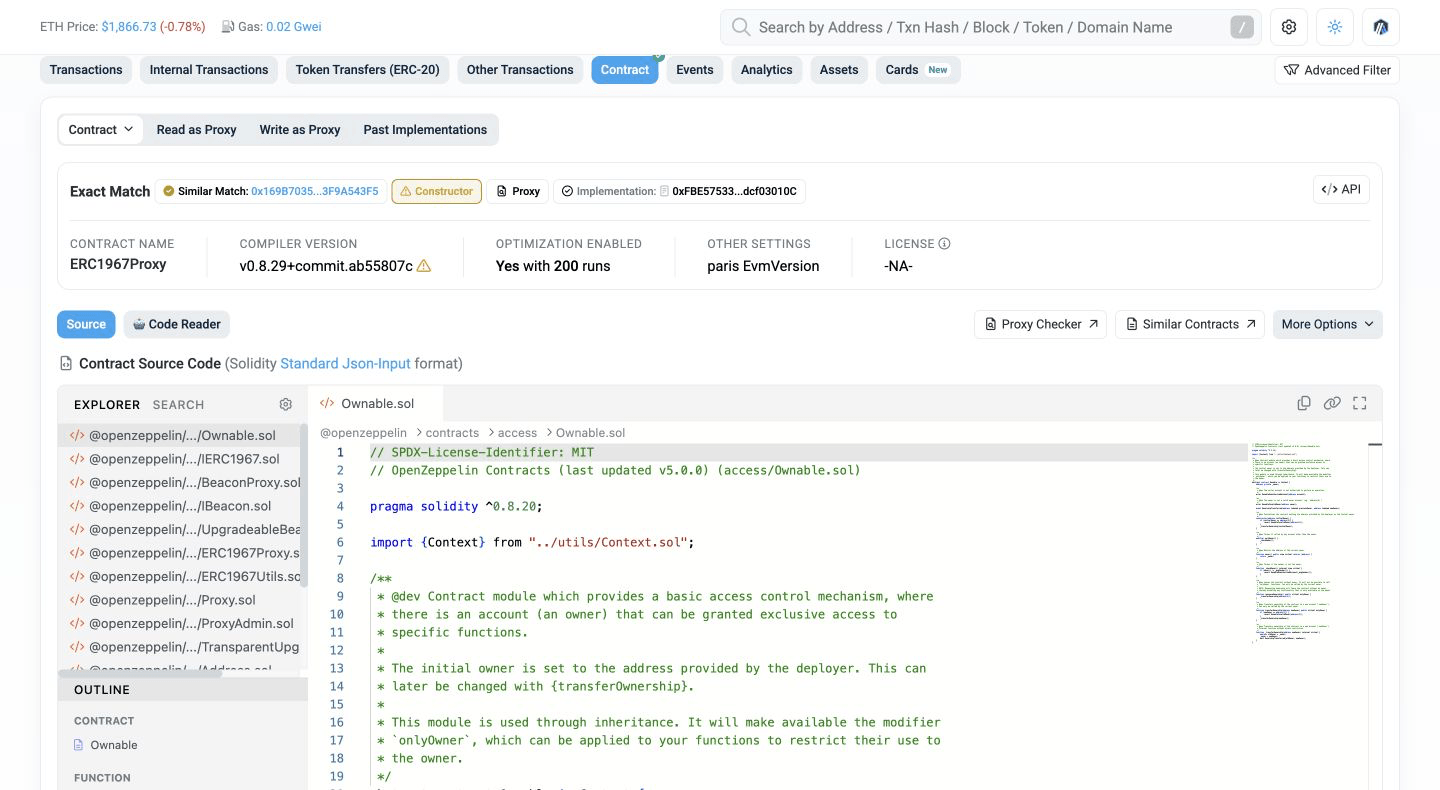
REAL ARBISCAN RECORD

MAINNET · Production record

This is the live Doudo Chain V2 mainnet core contract

This live Arbitrum One record shows the publicly verified core proxy, implementation address, and source code.

Open the live Arbiscan page
Doudo Chain core proxy contract, implementation, and public source code on ArbiscanOpen full-size source

Contract

Confirms this is a publicly inspectable on-chain program.

Proxy / Implementation

Shows which implementation the proxy currently executes.

Public source

Inspect verified deployed code and readable functions.

Public deployment information

Doudo Chain V2 contract addresses

This data comes directly from the public Doudo Chain Registry and includes only active contracts approved for public display. Open an address in the block explorer to inspect deployed code and transactions.

Arbitrum One

mainnet

Chain ID 42161 · eip155:42161

DoudoVRFRouter

Receives Chainlink VRF requests and fulfillments

DOUDOCHAINV2CoreUpgradeable

Proxy

Core contract for series, purchases, reveals, and redemptions

Show 5 more contracts+

DoudoBundleModuleUpgradeable

Proxy

Bundle configuration and minting module

DoudoRefundModuleUpgradeable

Proxy

Refund configuration and claims module

DoudoRedrawModuleUpgradeable

Proxy

Redraw and consolation draw module

DoudoCollectionRewardModuleUpgradeable

Proxy

Collection reward configuration and minting module

CollectionBookUpgradeable

Proxy

Collection books, deposits, withdrawals, and reward claims

Registry v2-efd3ad99c19995ed · Updated Jul 28, 2026, 8:00 AM

Doudo Chain’s complete evidence chain

Verification covers the randomness source, rule execution, and result record—not only a seed.

01

External randomness

The platform does not create and retain the randomness before sales.

02

Public rule execution

A smart contract maps randomness to the live remaining prize pool.

03

Evidence recorded on-chain

Requests, fulfillments, results, and block times can be inspected independently.

04

Anyone can verify

Players do not have to rely only on screenshots, support, or a platform-built verifier.

See more than the result—understand how it was produced

Learn each field on a reveal proof, then compare it step by step with the smart contract transactions on Arbiscan.